Discover Dolpo, Nepal: budget tips, treks, monasteries, and sacred lakes for an affordable Himalayan adventure.
Dolpo Budget Travel Guide
Dolpo, a remote Himalayan region in western Nepal, offers travelers an untouched blend of stark landscapes, ancient Tibetan culture, and spiritual serenity. Home to the mystical Crystal Mountain and the revered Shey Gompa, this hidden valley invites adventurers to step into a living legacy of Tibetan heritage. Prepare for a journey where every trail tells a story and every vista feels like a prayer.
Overview of Dolpo
Located in the Karnali province, Dolpo is one of Nepal’s least visited regions, preserving its pristine environment and traditional way of life. The area is divided into Upper Dolpo and Lower Dolpo, each offering distinct experiences. Upper Dolpo, accessible only via challenging treks, is famous for its high‑altitude deserts, ancient monasteries, and the turquoise Phoksundo Lake. Lower Dolpo serves as a gateway with more moderate trails and vibrant local markets.
Getting There on a Budget
Flights
The most economical way to reach Dolpo is to fly from Kathmandu to Nepalgunj (approx. USD 70‑90 round‑trip) and then take a domestic flight to Juphal, the gateway airstrip for Dolpo (USD 120‑150 round‑trip). Look for promotional fares on airlines like Buddha Air or Yeti Airlines.
Overland Option
For the ultra‑budget traveler, a bus from Kathmandu to Nepalgunj (USD 10‑15) followed by a local jeep or shared taxi to Juphal (USD 20‑30) can save money, though the journey takes longer (around 24‑30 hours total).
Best Time to Visit
The ideal window for a Dolpo budget trip is late May to early October. During this period, trails are clear, temperatures range from 5°C to 20°C in the valleys, and the risk of snow‑blocked passes is minimal. Avoid the monsoon months (June‑August) if you dislike heavy rain, though the landscape becomes lush.
Accommodation – Sleeping Cheap
- Tea Houses and Lodges: In Juphal and Dunai, basic rooms cost USD 5‑8 per night, often including meals.
- Homestays: Staying with a local family in villages like Ringmo or Saldang offers cultural immersion for USD 4‑6 per night, meals included.
- Camping: For trekkers, bringing a lightweight tent reduces costs to virtually zero; just remember to pack out all waste and respect local customs.
Food & Dining on a Budget
Dal bhat (lentil soup with rice) is the staple and costs USD 2‑3 per meal in most tea houses. Snacks like biscuits, fruits, and boiled eggs are cheaply available at village shops. Carrying water purification tablets or a filter saves money on bottled water.
Must‑See Attractions
Shey Gompa
Perched at 4,500 meters, Shey Gompa is a centuries‑old monastery that houses ancient scriptures and offers panoramic views of the surrounding peaks. Entrance is free, but a small donation (USD 1‑2) is appreciated.
Crystal Mountain (Mount Kanjiroba)
Known locally as “Crystal Mountain,” this sacred peak glitters with quartz formations. The best views are from the trek toward Shey Gompa; no fee is required.
Phoksundo Lake
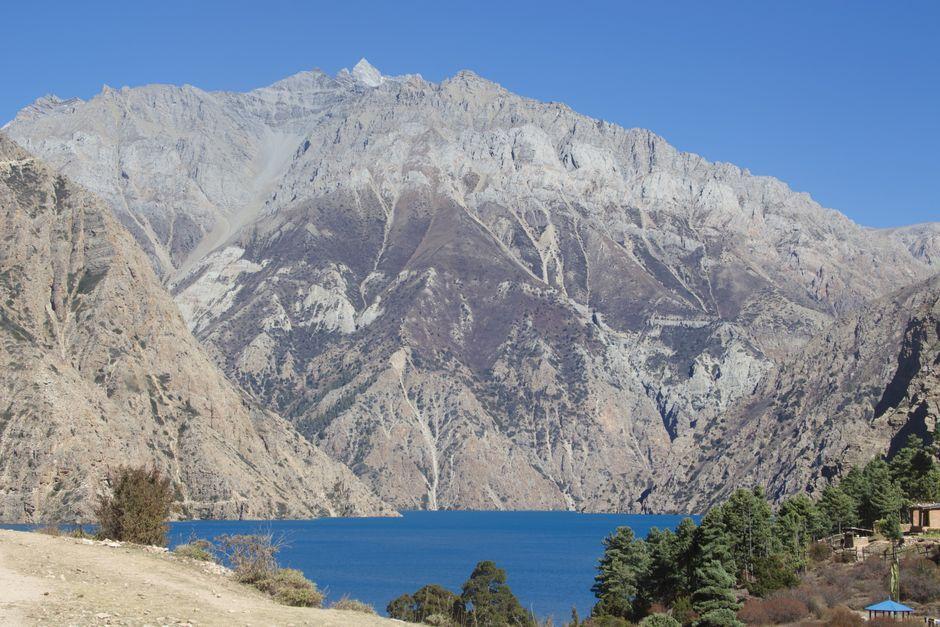
Nepal’s deepest lake, Phoksundo, sits at 3,600 meters and is famed for its vivid blue‑green waters. A short hike from Ringmo village leads to the lakeshore; entry is free, though a nominal park fee (USD 3) may apply for the Shey Phoksundo National Park.
Dolpo Trek Routes
- Lower Dolpo Trek (Juphal – Dunai – Ringmo – Phoksundo Lake – Juphal): 6‑8 days, moderate difficulty.
- Upper Dolpo Trek (Juphal – Shey Gompa – Crystal Mountain – Dho Tarap – Juphal): 12‑18 days, high altitude, requires a special permit.
Cultural Experiences
Participate in local festivals such as the Dakini Dance (held in summer) or observe daily Buddhist rituals at monasteries. Visiting a traditional wool‑weaving workshop in Saldang provides insight into the handicraft economy.
Budget Tips & Money Saving Hacks
- Travel Off‑Peak: Early May or late September often yields lower flight prices and fewer crowds.
- Share Transport: Join other trekkers for jeep shares from Juphal to trailheads.
- Eat Local: Stick to dal bhat and avoid imported goods.
- Carry Snacks: Purchase nuts and chocolate in Nepalgunj where prices are lower.
- Use a Refillable Bottle: Reduces water expenses and plastic waste.
- Negotiate Lodge Rates: In low season, many owners will discount for longer stays.
Practical Information
- Permits: Trekkers need a TIMS card (USD 20) and a Dolpo Restricted Area Permit (USD 10‑15 per week). Obtain these in Kathmandu or at the Nepal Tourism Board office in Nepalgunj.
- Visas: Most nationalities receive a 30‑day tourist visa on arrival (USD 30) extendable up to 90 days.
- Health: Altitude sickness is a concern; acclimatize gradually, stay hydrated, and consider carrying Diamox after consulting a doctor.
- Safety: Mobile coverage is spotty; carry a satellite phone or a local SIM with limited data. Inform someone of your itinerary.
Sample 7‑Day Budget Itinerary (Lower Dolpo)
Day 1: Fly Kathmandu → Nepalgunj → Juphal; overnight in Juphal (USD 7).
Day 2: Jeep Juphal → Dunai; trek Dunai → Chhekpa (USD 5 lodge).
Day 3: Trek Chhekpa → Ringmo; visit Phoksundo Lake (USD 6 homestay).
Day 4: Explore Ringmo and lake shores; optional side trek to nearby waterfalls.
Day 5: Trek Ringmo → Saldang; experience local wool weaving (USD 5 lodge).
Day 6: Trek Saldang → Dunai; return to Juphal by jeep.
Day 7: Fly Juphal → Nepalgunj → Kathmandu.
Estimated total cost (excluding international flights): USD 250‑300.
FAQs
Q: Do I need a guide for Dolpo?
A: While independent trekking is possible on Lower Dolpo routes, a guide is strongly recommended for Upper Dolpo due to navigation challenges and permit requirements.
Q: Is ATM access available?
A: ATMs are scarce outside Nepalgunj and Juphal; carry enough cash (Nepali rupees) for the trek.
Q: Can I charge my electronics?
A: Most lodges have solar charging; bring a power bank and a universal adapter.
Q: What language is spoken?
A: Nepali is widely understood; locals also speak Dolpo‑ Tibetan dialects. Basic Nepali phrases go a long way.
Q: Are there any cultural sensitivities?
A: Dress modestly, remove shoes before entering monasteries, and ask permission before photographing people.
Conclusion
Dolpo remains one of Nepal’s best‑kept secrets, offering raw beauty, deep spirituality, and authentic Tibetan culture without the crowds of more popular trekking regions. By planning wisely—choosing budget flights, staying in tea houses or homestays, eating local fare, and respecting customs—you can experience this Himalayan gem without breaking the bank. Embrace the silence of the high passes, the sparkle of Crystal Mountain, and the warm smiles of the Dolpo people, and let every step become a prayer of gratitude.